

Blog hippo
hippo
What Is WhatsApp Marketing? Benefits & Strategy
WhatsApp Marketing is the practice of using WhatsApp to communicate with customers, promote products or services, generate leads, nurture prospects, provide customer support, and increase sales through personalized, real-time conversations.
Unlike traditional marketing channels, WhatsApp enables businesses to have direct, two-way conversations with customers. With high message open rates and instant delivery, it has become one of the most effective customer engagement platforms for businesses of all sizes.
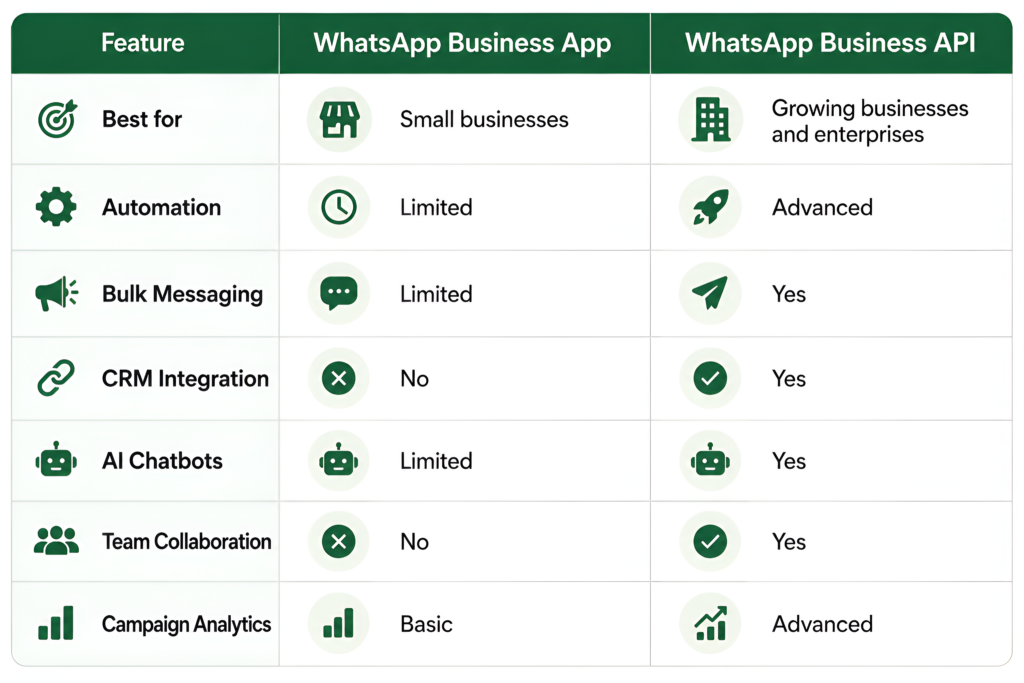
Businesses can use the WhatsApp Business App or the WhatsApp Business Platform (API) to communicate with customers at scale. Learn more about the platform in Meta’s official WhatsApp Business documentation. AI-powered platforms like SuperHippo AI further enhance these capabilities by automating campaigns, customer interactions, and engagement workflows.
How Does WhatsApp Marketing Work?
WhatsApp Marketing works by allowing businesses to engage customers through one of the world’s most widely used messaging platforms. Companies can use the WhatsApp Business App for small-scale communication or the WhatsApp Business API for large-scale, automated campaigns.
A typical WhatsApp marketing workflow includes:
Customer Opt-In
Customers voluntarily subscribe by scanning a QR code, filling out a website form, clicking a WhatsApp button, or providing consent during checkout.
Audience Segmentation
Businesses organize customers based on interests, purchase history, location, or behavior to deliver more relevant messages.
Campaign Creation
Marketing teams create personalized campaigns that may include:
- Promotional offers
- Product launches
- Seasonal discounts
- Event invitations
- Educational content
- Customer onboarding
Automation
Businesses looking to automate conversations at scale can integrate AI Chatbots and Conversational Support to provide instant responses and improve customer satisfaction.
AI-powered workflows automatically send messages based on customer actions, such as:
- Welcome messages
- Lead nurturing
- Abandoned cart reminders
- Appointment confirmations
- Payment reminders
- Re-engagement campaigns
Analytics
Businesses track campaign performance through metrics such as:
- Delivery rate
- Open rate
- Click-through rate
- Conversion rate
- Customer responses
- Revenue generated
Why Is WhatsApp Marketing Important?
Modern customers expect instant communication. Traditional email marketing often struggles with low open rates, while social media posts compete with constantly changing algorithms.
WhatsApp solves these challenges by providing:
- Instant message delivery
- High engagement
- Personalized conversations
- Faster customer support
- Better lead nurturing
- Improved customer satisfaction
- Higher conversion rates
As consumers increasingly prefer messaging apps over phone calls or email, WhatsApp has become a critical channel for customer communication.
Benefits of WhatsApp Marketing
Higher Customer Engagement
WhatsApp messages are typically opened within minutes, making it one of the fastest ways to reach customers.
Personalized Communication
Businesses can tailor messages using customer names, purchase history, preferences, and behavior.
Improved Lead Generation
Interactive conversations help businesses qualify leads more effectively than one-way advertising.
Combining WhatsApp campaigns with Customer Acquisition workflows helps businesses capture, qualify, and nurture leads more efficiently.
Better Customer Support
Businesses can also connect WhatsApp with a Ticketing System to streamline support requests and improve response times.
Customers receive quick answers, reducing response times and improving satisfaction.
Increased Sales
Personalized recommendations, limited-time offers, and abandoned cart reminders encourage purchases.
Marketing Automation
Businesses can automate repetitive communication while maintaining a conversational customer experience.
Cost-Effective Campaigns
Compared to many traditional advertising channels, WhatsApp marketing offers a lower communication cost with high engagement.
Types of WhatsApp Marketing Campaigns
Promotional Campaigns
Share discounts, special offers, flash sales, and new product launches.
Lead Nurturing Campaigns
Guide potential customers through the buying journey using educational and personalized messages.
Abandoned Cart Recovery
E-commerce brands often automate these reminders using Abandoned Cart Recovery workflows to recover lost sales.
Automatically remind customers to complete their purchases with personalized follow-ups.
Customer Retention Campaigns
Keep existing customers engaged through loyalty rewards, exclusive offers, and personalized recommendations.
Appointment Reminders
Reduce no-shows by sending automated reminders and confirmations.
Customer Feedback Campaigns
Collect reviews, ratings, and surveys to improve products and services.
Industries That Benefit from WhatsApp Marketing
Almost every industry can use WhatsApp Marketing effectively, including:
E-commerce
- Product recommendations
- Order updates
- Cart recovery
- Customer support
Healthcare
- Prescription reminders
- Patient communication
Education
- Student enrollment
- Course updates
- Admission support
Real Estate
- Property inquiries
- Virtual tour scheduling
- Lead follow-ups
Financial Services
- Customer onboarding
- Payment reminders
- Account notifications
Travel and Hospitality
- Booking confirmations
- Travel updates
- Customer assistance
How to Build a Successful WhatsApp Marketing Strategy
1. Define Clear Goals
Set measurable objectives such as:
- Generate leads
- Increase sales
- Improve customer retention
- Enhance customer support
- Boost engagement
2. Build an Opt-In Audience
Only send messages to customers who have explicitly agreed to receive communications.
3. Segment Your Audience
Create customer groups based on:
- Interests
- Purchase history
- Location
- Customer lifecycle stage
- Previous interactions
4. Personalize Every Message
Use customer data to create meaningful conversations rather than generic broadcasts
5. Automate Customer Journeys
Use AI-powered workflows to automate:
- Welcome messages
- Follow-ups
- Promotions
- Support responses
- Feedback requests
6. Measure Performance
Monitor:
- Open rates
- Response rates
- Conversion rates
- Customer satisfaction
- ROI
WhatsApp Marketing Best Practices
- Obtain customer consent before messaging.
- Send relevant and personalized content.
- Avoid excessive promotional messaging.
- Use automation responsibly.
- Respond promptly to customer inquiries.
- Test campaign performance regularly.
- Analyze campaign analytics for optimization.
- Integrate WhatsApp with your CRM and marketing tools.
Common WhatsApp Marketing Mistakes
- Sending unsolicited messages
- Ignoring customer segmentation
- Overusing promotional content
- Failing to personalize messages
- Not tracking campaign performance
- Delayed customer responses
- Using WhatsApp without a clear strategy
Real Business Example
An online fashion retailer notices that many shoppers add products to their carts but leave without completing the purchase.
The business sets up an automated WhatsApp campaign that sends a personalized reminder one hour after cart abandonment. The message includes the customer’s name, product details, and a limited-time discount. Customers who still don’t purchase receive a follow-up message after 24 hours.
This automated workflow helps recover lost sales while providing a convenient and personalized customer experience.
Frequently Asked Questions (FAQ)
What is WhatsApp Marketing?
WhatsApp Marketing is the process of using WhatsApp to communicate with customers, promote products, automate conversations, generate leads, and improve customer engagement.
How does WhatsApp Marketing work?
Businesses use the WhatsApp Business App or WhatsApp Business API to send personalized messages, automate workflows, and manage customer interactions at scale.
Is WhatsApp Marketing effective?
Yes. WhatsApp offers high message open rates, real-time communication, and personalized interactions, making it one of the most effective customer engagement channels.
Is WhatsApp Marketing suitable for small businesses?
Absolutely. Small businesses can start with the WhatsApp Business App and transition to the WhatsApp Business API as they grow.
Can WhatsApp Marketing be automated?
Yes. Businesses can automate welcome messages, lead nurturing, abandoned cart recovery, appointment reminders, customer support, and follow-up campaigns using AI-powered platforms.
Is WhatsApp Marketing better than email marketing?
Both channels serve different purposes. WhatsApp generally achieves higher engagement and faster responses, while email is better suited for long-form communication and newsletters. Many businesses use both together as part of an omnichannel marketing strategy.
Which industries benefit most from WhatsApp Marketing?
E-commerce, healthcare, education, real estate, travel, finance, SaaS, retail, and professional services all benefit from WhatsApp Marketing.
Conclusion
WhatsApp Marketing has evolved from simple messaging into a powerful customer engagement and business growth channel. By combining personalized communication, automation, AI, and analytics, businesses can generate more leads, improve customer satisfaction, increase conversions, and build lasting customer relationships.
WhatsApp is more than just a messaging app—it’s a powerful channel for engaging customers, generating leads, and driving sales. Businesses can maximize results by combining WhatsApp campaigns with Customer Acquisition, AI Voice Agents, and Conversational Support solutions to create a seamless customer experience.
Whether you’re a startup or an enterprise, implementing a well-planned WhatsApp Marketing strategy can help you create meaningful customer experiences while driving measurable business results. Platforms like SuperHippo AI enable businesses to scale these efforts through AI-powered automation, omnichannel communication, and customer engagement workflows.
\
Subscribe to stay ahead with the latest updates and entrepreneurial insights!
Share this article:


Subscribe to our newsletter
Get access to the latest industry & product insights.
You may be interested in these articles
-
hippo1st September 2026
Customer Communication Automation: A Guide for BusinessesCustomer communication automation is changing how businesses interact with.. [..]Read story
-
hippo31st August 2026
AI Customer Engagement: Fixing Voice Bot Flaws.Think about the last time you called a business and heard, “Press 1 for.. [..]Read story
-
hippo21st August 2026
Missed Calls Are Costing You Customers: Here’s WhyMissed calls can cost businesses more than a conversation. They can mean lost.. [..]Read story
-
hippo12th August 2026
How AI Inbound Calling Helps Businesses Never Miss a Customer CallA missed customer call can mean a missed lead, a lost sale, or a customer.. [..]Read story